
English| EUR
Suggested for you
More currencies
Choose a language
The Noosa Everglades sit in a subtropical zone where water conditions shift dramatically between seasons. Understanding temperature ranges, rainfall cycles, and wind patterns helps you pick the right window for flat water and reliable visibility.
Quick answer
The Noosa Everglades experience a subtropical climate with warm, wet summers (December to March) and mild, dry winters (June to August). Average temperatures range from 15°C in winter mornings to 30°C in summer afternoons. Early morning hours between 06:00 and 10:00 offer the calmest water conditions year-round, with glass-like reflections most reliable during the dry season when wind speeds drop below 10 km/h.
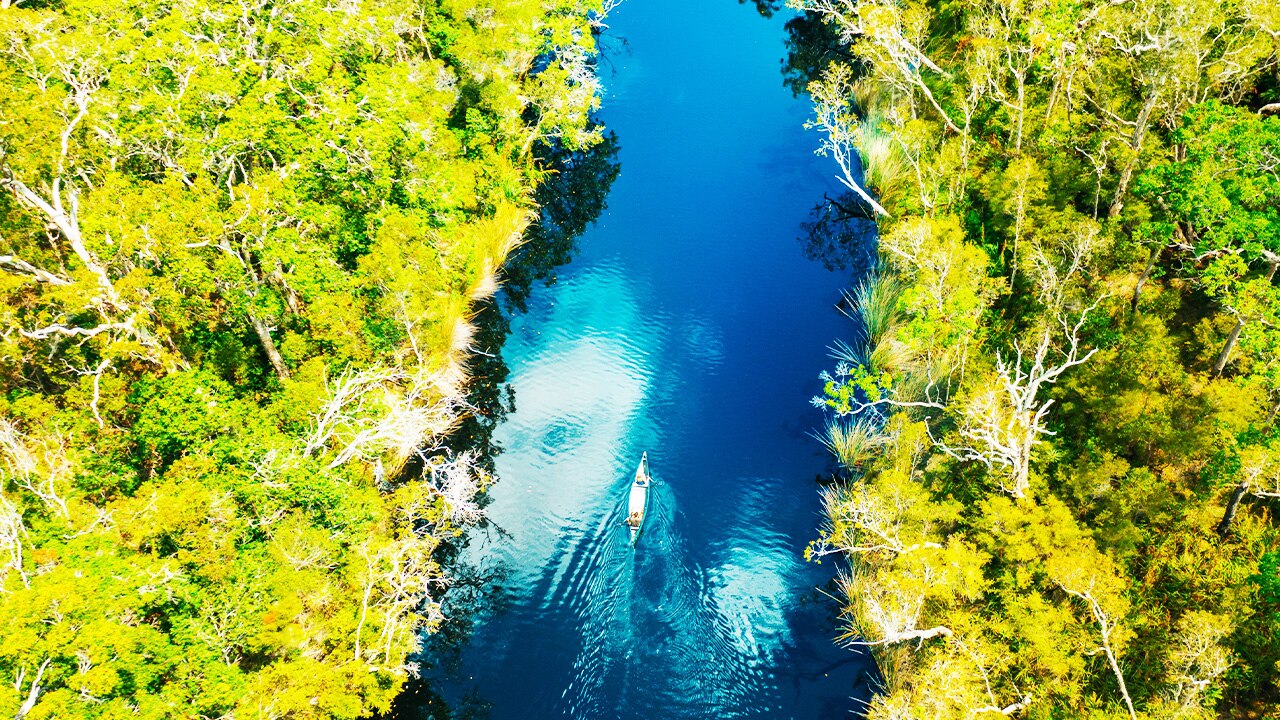
The Noosa River system filters through the Cooloola Section of Great Sandy National Park under conditions shaped by two distinct seasonal rhythms. Between May and October, the region enters its dry phase—rainfall drops below 80 millimeters monthly, humidity hovers near 60 percent, and morning mist burns off by mid-morning to reveal sharp blue skies. Water levels stabilize during this window, and the mirror reflections that define the everglades become predictable rather than occasional. Summer brings a different dynamic. December through March sees afternoon thunderstorms roll in from the coast, pushing monthly rainfall above 150 millimeters and raising water levels by 30 to 50 centimeters. The tea-colored water—stained by tannins from melaleuca trees—turns darker and more opaque during heavy rain cycles. Wind gusts pick up in the afternoons, breaking surface tension and scattering reflections. Temperatures climb into the low thirties, and humidity sits above 75 percent most days. Mornings remain the most stable period even in wet months, but the window narrows—by 11:00, thermal convection kicks in and conditions deteriorate. Noosa everglades weather shapes more than just visibility. Water temperature swings between 18°C in July and 26°C in January, affecting fish activity and birdlife behavior. Migratory species concentrate in the system between April and September, when cooler water draws baitfish into the shallows. The dry months also coincide with lower insect populations, particularly sandflies and mosquitoes that emerge in force during humid spells. Wind direction matters as much as speed. Southeasterly trade winds dominate from May to September, funneling down the river corridor and creating consistent morning calm before strengthening after noon. Northerly winds in summer months bring moisture and instability. A shift to westerlies—rare but possible in late winter—signals a high-pressure system and produces the stillest conditions of the year, sometimes holding flat water past midday. Local operators monitor Bureau of Meteorology marine forecasts and adjust departure schedules around predicted wind changes, prioritizing the narrow window when light levels, temperature, and water surface align for optimal reflection photography and wildlife observation.
“Morning mist burns off by mid-morning to reveal sharp blue skies, and the mirror reflections that define the everglades become predictable rather than occasional.”
The Noosa Everglades experience is most rewarding during the shoulder seasons when temperatures are moderate and humidity levels are lower. For the best water conditions, prioritize early morning visits to witness the still, mirror-like surface of the river.
Mild 18°C–28°C; lower rainfall.
Dryer air and blooming wildflowers characterize this season.
Hot 21°C–31°C; increased humidity.
Expect warmer temperatures and occasional afternoon thunderstorms.
Pleasant 17°C–27°C; stable conditions.
Clearer skies and cooler evenings are common during these months.
Cool 10°C–22°C; minimal rain.
Crisp, cool mornings provide stable water conditions for paddling.
—
The best arrival window is 06:00–10:00 for calm, glass-like water conditions ideal for viewing reflections.
Verdict: Aim for a visit between April and May or September and October, arriving between 06:00–10:00 to avoid wind and maximize water clarity.
The Noosa Everglades are located within the Great Sandy National Park, which provides public access throughout the entire day and night.
The Everglades' subtropical climate and exposed waterways require specific gear to stay comfortable throughout your visit.
Everything you need to know about noosa everglades weather
The region enjoys a subtropical climate, but the cooler months between May and September often provide the most comfortable noosa everglades weather for outdoor exploration. These months feature lower humidity and mild temperatures perfect for navigating the mirrored waterways of the Cooloola section.
Stable, calm conditions are common, but recent rainfall can influence the water level and visibility in the swamp systems. Monitoring the forecast ensures you experience the tranquil reflections that define this unique environment.
Rain does not necessarily stop boat departures, as the rainforest canopy provides significant shelter while navigating the tea-tree infused waters. You can still appreciate the dramatic atmosphere of this natural landmark even during light showers.
Daytime temperature shifts are common, making early morning the preferred time to visit for stable conditions. The best arrival window is 06:00–10:00, when the air is typically calm and the light is ideal for photography.
Light, breathable clothing and a waterproof layer are recommended to adapt to shifting humidity or unexpected showers. Bringing sunscreen and insect repellent is also wise, as the wetlands remain active regardless of the specific daily forecast.
Many visitors underestimate how quickly conditions can change within the Great Sandy National Park and arrive unprepared for midday heat. Planning your trip during the cool morning hours avoids the most intense sun and ensures a more comfortable experience.
How to Get to Noosa Everglades
Read more GuideWhere Are the Noosa Everglades
Read more GuideNoosa Everglades Tour Review
Read more Tickets & toursNoosa River Cruise
Read more Tickets & toursNoosa River Cruise Lunch
Read more Tickets & toursNoosa River Cruise Sunset
Read more GuideNoosa River Cruise Prices
Read more GuideNoosa Everglades Cruise and Canoe
Read more